
Contact Us Today406-319-3024
Contact Us Today406-319-3024
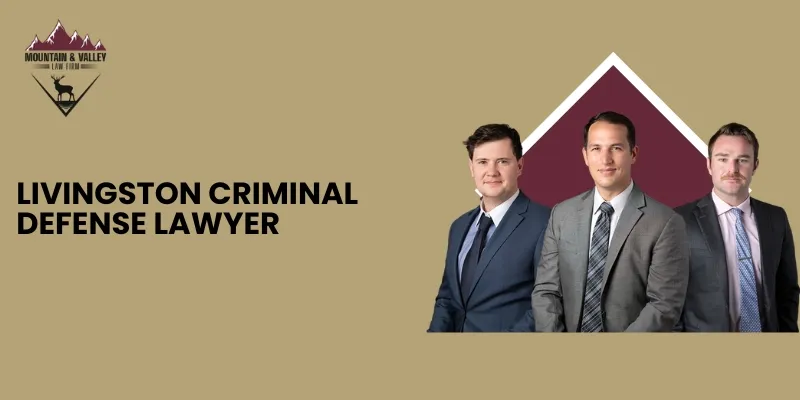
A criminal charge, whether for a misdemeanor or felony offense, can have a profound effect on your freedom, your finances, and your future. If you’ve been charged with a crime in Livingston, a Livingston criminal defense lawyer can explain the allegations against you, the legal process you may be dealing with, and your rights under Montana law.
At Mountain & Valley Law Firm, our attorneys develop legal strategies based on the facts of each case and work with clients to help them make informed decisions at a time that is often difficult and confusing.
Contact Us Today 406-319-3024
At Mountain & Valley Law Firm, we offer strategic criminal defense supported by disciplined preparation and the personal attention of an attorney on your case. We represent clients charged with misdemeanors and felonies in southwest Montana, including DUI, drug offenses, assault, theft, domestic violence allegations, and other offenses.
From careful case review to our disciplined, results-driven approach, we are a legal team dedicated to excellent criminal defense without cutting corners. Our law firm was built on the values of service, hard work, and honor. We go the distance for every client and work with them to craft individualized defense strategies that protect their rights.
A criminal case may begin with an arrest, citation, or criminal complaint. Several stages typically follow before the matter is resolved. A defendant may need to attend an initial appearance, an arraignment, pretrial hearings, and, if required, a trial.
A defendant’s legal rights in a criminal prosecution include the right to counsel, the right to remain silent, the right to confront witnesses, and the right to a jury trial in some cases. Mont. Code Ann. § 46-8-101 provides a defendant’s right to counsel. Mont. Code Ann. § 46-16-110 provides the right to a jury trial in criminal cases as applicable.
In a criminal matter, the state must prove all elements of the crime charged beyond a reasonable doubt. Evidence can include testimony from witnesses, police reports, surveillance video, forensic testing, electronic communications, and physical evidence gathered during the investigation. An attorney may review whether the evidence was obtained legally, preserved correctly, and is admissible under the Montana Rules of Evidence.
A thorough review of the evidence may also uncover weaknesses in the case, such as inconsistencies, credibility issues, or procedural errors that could affect the prosecution’s ability to prove its case. If problems with the evidence or investigation are found, they can sometimes be addressed before trial through pretrial motions, plea negotiations, or arguments made during the trial itself.
The initial steps following a criminal accusation can significantly influence the progression of the case. What you say to police, as well as failures to appear in court or to collect evidence in a timely manner, can foreclose options in the future. An attorney can review the allegations, advise you of your rights, and take immediate steps to preserve evidence and investigate the events that led to the charges.
Acting early may allow an attorney to locate witnesses, secure surveillance footage before it is erased, and preserve evidence while memories and records remain fresh.
The Long-Term Impact of Criminal Charges
Offenses charged in Livingston may be tried in the Park County Justice Court, Livingston City Court, or the Sixth Judicial District Court for Park County, depending on the circumstances and degree of the offense. Court calendars, filing deadlines, and procedural timelines affect the course of a criminal case.
Knowledge of the rules and local court policies is also critical to the development of a defense strategy. Understanding the practices and procedures of the Sixth Judicial District Court and other local courts can help attorneys anticipate scheduling, filing, and case management expectations throughout the case.
If the police want to question you about a crime you are suspected of having committed, you have the right to remain silent and to speak to an attorney before answering any questions. Your exercise of these rights cannot be used against you in court as evidence of your guilt.
To safeguard your legal standing while a criminal inquiry is underway, you can courteously tell the authorities you’ll only speak after consulting with a lawyer.
Criminal cases are often resolved through plea agreements. In Fiscal Year 2025, the U.S. Sentencing Commission reported that 98% of federal criminal cases ended with a guilty plea. While Montana state criminal cases have their own processes, the data illustrates that negotiated plea agreements are a common method of resolving criminal cases.
The primary difference between a misdemeanor and a felony in Montana is the class of the offense and the authorized punishment. Mont. Code Ann. § 45-2-101 defines a felony as an offense punishable by imprisonment in the state prison.
A misdemeanor is an offense punishable by a fine, imprisonment in the county jail or detention facility, or both. Classification of an offense can also have future legal consequences for employment, firearm rights, and other matters.
A criminal record may affect future employment, as many employers do background checks as part of their hiring process. The Bureau of Justice Statistics reported that collectively, states were maintaining criminal history records on about 114,376,500 individuals as of 2020.
Whether a particular charge or conviction appears on a background check depends on Montana law, the type of record, and the position being sought.
A criminal charge does not automatically determine the outcome of your case. Knowing the allegations, the evidence, and the legal process can allow you to make informed decisions at every stage.
At Mountain & Valley Law Firm, we represent clients throughout Livingston and southwest Montana, offering clear guidance and strategic advocacy from start to finish. Schedule a consultation today to hire a criminal defense lawyer.
Contact Mountain & Valley Law Firm to discuss our available representation.
© 2026 Mountain & Valley Law Firm • All Rights Reserved.
Disclaimer |
Site Map |
Privacy Policy.
Digital Marketing By: 
*Images are obtained under license from Canva and other third-party stock image providers, with attribution included where required.