
Contact Us Today406-319-3024
Contact Us Today406-319-3024
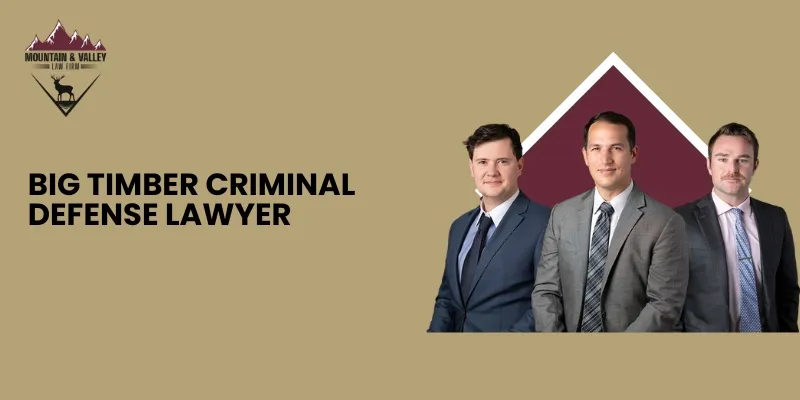
Being charged with a crime can leave you facing difficult decisions with little time to understand your legal options. A Big Timber criminal defense lawyer can review the charges and explain the Montana laws that apply to your case so that you can make informed decisions at each stage of the process. Early legal guidance can help you better understand the criminal justice process and protect your rights from the outset.
Valley Law represents individuals facing a wide range of criminal matters in southwest Montana.. Whether you were stopped by the Montana Highway Patrol on Interstate 90, cited by the Sweet Grass County Sheriff’s Office or arrested inside Big Timber city limits, the decisions you make in the first few days — what you say, which hearings you attend and whether you request evidence — can shape the outcome of your case
Contact Us Today 406-319-3024
Valley Law offers criminal defense services grounded in disciplined preparation and attorney-focused representation. At Valley Law, our attorneys practice with a spirit of service, integrity, and diligence while formulating a legal strategy that is custom-made for each client.
We understand the importance of open communication and detailed case preparation. Our attorneys work closely with clients throughout the criminal justice process, so they understand their legal options and remain actively involved in decisions affecting their cases.
Our Big Timber criminal defense attorneys represent adults, college students and visitors charged with misdemeanor and felony offenses, including:
An arrest does not always lead to formal criminal charges. In most cases, prosecutors review the evidence available, the laws that may have been broken, witness and victim statements, law enforcement reports, and other information in an investigation before filing a case.
According to the FBI, law enforcement agencies reported more than 14 million criminal offenses in 2024, but not every reported offense resulted in criminal charges. Prosecutors must decide whether sufficient evidence exists to prove each element of the alleged offense under Montana law.
Additional evidence may be developed after charges have been filed. Prosecutors may add to, reduce, or dismiss charges as the facts of the case unfold. Each charging decision is based on the particular facts of the case.
In Sweet Grass County, the County Attorney’s Office at 200 West First Avenue in Big Timber prosecutes all felonies committed in the county and misdemeanors committed outside Big Timber city limits. Misdemeanors inside city limits are handled in Big Timber City Court. Knowing which office and which court is handling your case tells your attorney who to negotiate with and what deadlines apply.
Most Big Timber criminal cases are heard at the Sweet Grass County Courthouse, 200 West 1st Avenue. Misdemeanors and traffic offenses go to Sweet Grass County Justice/City Court, while felonies are filed in the Sixth Judicial District Court, which also hears Park County cases in Livingston. A typical case follows these stages:
Missing a scheduled appearance can result in a warrant, so contact an attorney before your first court date.
Before official charges are brought, individuals under a criminal investigation are still entitled to constitutional rights. The Fourth Amendment bars unreasonable searches and seizures, the Fifth Amendment addresses self-incrimination, and the Sixth Amendment ensures the right to an attorney once adversarial criminal proceedings begin.
Article II of the Montana Constitution also guarantees these rights. Montana goes further than federal law: Article II, Section 10 creates an express right to individual privacy, and Section 11 protects against unreasonable searches and seizures. Montana courts have relied on these provisions to suppress evidence in cases involving vehicle searches, phone data and warrantless entries.
Whether law enforcement lawfully obtained evidence or violated a person’s constitutional rights can become a central issue in a Montana criminal case. If police want to question you, you can politely decline to answer and ask for a lawyer.
The punishment range for a criminal conviction depends on the type of offense, the defendant’s criminal history, and other factors established under Montana law. The court may sentence the defendant to jail or prison, probation, fines, restitution, community service, or a court-ordered treatment program. Montana classifies most criminal offenses as either a misdemeanor or a felony, under Mont. Code Ann. § 45-2-101. A misdemeanor is punishable by up to one year in county jail, while a felony can bring more than one year in state prison. For example, a first-offense DUI carries 24 hours to 6 months in jail and a $600–$1,000 fine, along with the mandatory ACT (Assessment, Course and Treatment) program.
A criminal conviction may have additional consequences for a defendant’s future employment. According to the EEOC, a national survey showed 92% of the responding employers check the criminal background of all or some job applicants. A conviction can also affect future employment — an EEOC survey found 92% of responding employers check the criminal background of some or all applicants. Other consequences can include driver’s license suspension, ignition interlock requirements, higher insurance rates, loss of firearm rights after a felony or PFMA conviction, loss of hunting and fishing privileges and immigration consequences for non-citizens.
A criminal charge does not have to become a permanent record. Depending on your case and history, a Big Timber defense lawyer may be able to pursue:
Call a criminal defense attorney before your initial appearance. After a DUI test refusal, you have only 30 days to challenge the license suspension.
Yes, it is wise to talk to a lawyer even for a misdemeanor in Big Timber, because a conviction can bring up to a year in jail, fines and a permanent record. An attorney can review the citation, check whether the stop or search was lawful and often negotiate a dismissal, reduction or deferred sentence in Sweet Grass County Justice/City Court before your case reaches trial.
Criminal cases in Sweet Grass County are heard at the County Courthouse, 200 West 1st Avenue in Big Timber. Misdemeanors and traffic offenses are handled by Justice/City Court, while felonies are filed in the Sixth Judicial District Court. The Sweet Grass County Attorney prosecutes felonies and county misdemeanors.
A first DUI in Montana is punishable by 24 hours to 6 months in jail and a fine of $600 to $1,000, plus completion of the ACT program. Penalties increase if a passenger under 16 was in the vehicle, and refusing a breath or blood test can trigger a separate license suspension that must be challenged within 30 days.
Yes, some Montana charges can be dismissed or removed from your record through a deferred sentence, deferred prosecution or a one-time misdemeanor expungement. Eligibility depends on the offense, your history and whether you have stayed conviction-free for the required period, so a lawyer should review your case early.
You should contact a Big Timber criminal defense lawyer as soon as possible after an arrest or citation, ideally before your initial appearance. Early involvement lets your attorney preserve evidence such as video footage, meet short deadlines like the 30-day DUI refusal challenge and advise you before you speak with police or prosecutors.
If you have been charged with a crime in Big Timber, getting sound legal advice as soon as possible can help you know your options under Montana law. The legal team at Valley Law is well-versed in the operations of the Sixth Judicial District Court for Sweet Grass County, offering strategic counsel through each step of a criminal matter. Schedule a consultation today to hire a criminal defense lawyer.
Contact Valley Law to discuss our available representation.
517 S 22nd Ave Ste 5,
Bozeman, MT 59718 Get Directions

Call Us Today 406-319-3024
© 2026 Valley Law• All Rights Reserved.
Disclaimer |
Site Map |
Privacy Policy.
Digital Marketing By: 
*Images are obtained under license from Canva and other third-party stock image providers, with attribution included where required.