
Contact Us Today406-319-3024
Contact Us Today406-319-3024
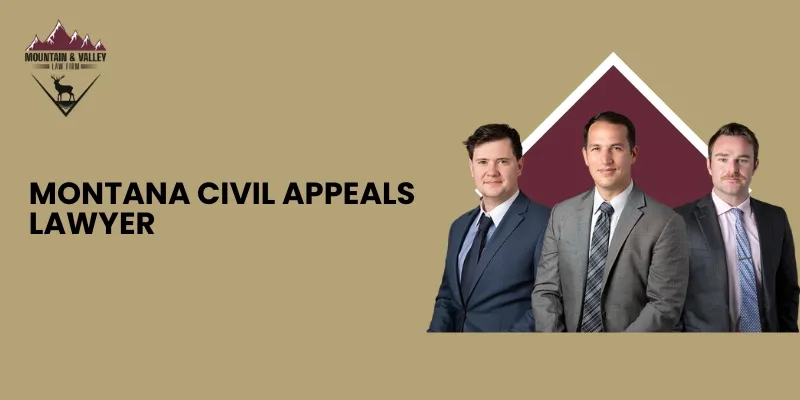
A Montana civil appeals lawyer can assist you in appealing or defending a trial court’s judgment if you believe that legal mistakes affected your case’s outcome. The appeal process differs significantly from a trial because the appellant must demonstrate that the trial court committed a legal error based on the record created in the lower court.
Appellate courts have specific procedural rules and filing deadlines, so it is essential to have a meticulous lawyer who can analyze your situation and determine if an appeal is warranted. Mountain & Valley Law Firm serves clients in Montana who have civil appeals, representing them at all stages of the appellate process.
Contact Us Today 406-319-3024
Our attorneys handle civil appeals with the same level of care that we provide in all aspects of our practice, including rigorous preparation, careful legal analysis, and strategic, persuasive written advocacy.
From the very start, our firm has prided itself on embodying military principles such as service, hard work, and integrity. When handling an appeal, we take no shortcuts in reviewing the trial court’s decision or presenting legal arguments to the appellate court.
At Mountain & Valley Law Firm, we offer clients direct attorney involvement at every stage of the appellate process, from thoroughly reviewing the record and researching the law to developing a sound legal strategy and crafting legal arguments for every appeal.
A civil appeal is not a second chance to make a new argument or to present new evidence to another court. The appellate court considers whether the trial court made an error of law that affected the decision. Common issues on appeal include incorrect interpretations of statutes, erroneous evidentiary rulings, and improper jury instructions.
A party may also appeal alleged constitutional violations or argue that the trial court abused its discretion. Since appellate courts typically review only the record that comes from the trial court, knowing what issues can be appealed often involves a detailed analysis of the proceedings and the relevant standard of review.
Civil appeals in Montana are conducted in accordance with the Montana Rules of Appellate Procedure. As provided in M.R.App.P. 4, except in certain circumstances, a notice of appeal is due within the applicable deadline period after entry of the judgment or appealable order.
After the notice of appeal is filed, the parties prepare the record on appeal and file appellate briefs in accordance with M.R.App.P. 13-15 and, in some cases, present oral argument. On appeal, the court reviews questions of law based on the record before it, rather than receiving witness testimony or considering new evidence.
After the parties submit their briefs and, when permitted, present oral argument, the appellate court may decide that the judgment should be affirmed, reversed, modified, or vacated. The court may also remand the matter to the trial court with directions to conduct further proceedings consistent with its opinion.
Montana appellate courts also apply the harmless error doctrine; that is, if the error was harmless, the judgment may be upheld if the party’s rights were not substantially affected by the error. The result will depend on the legal issues presented, the standard of review, and the nature of the record created in the trial court.
Written advocacy is one of the most significant elements of a civil appeal. Appellate briefs define the legal issues presented for review, cite statutes, court rules, and judicial precedent, and make the argument that the trial court’s decision should be affirmed or reversed. Since appellate courts generally do not receive witness testimony or consider new evidence, the appellate briefs and the case record frequently form the core of the court’s decision.
Effective appellate advocacy requires thorough legal research, preservation of issues in the trial court, and precise citation to the appellate record.
Appeals in from the district courts in Montana are taken to the Montana Supreme Court. This court does not conduct a new trial or hear new evidence. Instead, the Supreme Court reviews the legal issues presented by the parties.
Appeals in cases from Bozeman and other courts in Gallatin County could eventually be decided by the Montana Supreme Court in Helena, if the requirements for appellate jurisdiction are met.
The Administrative Office of the U.S. Courts reports that the regional federal courts of appeals handled 39,469 appeals in Fiscal Year 2024. This total included 21,445 civil appeals. Montana civil appeals are subject to state law and the Montana Rules of Appellate Procedure. These figures, however, show that the review of alleged errors by a party is an integral component of our judicial system.
Not all appeals are heard with an oral argument before the appellate court. According to the Administrative Office of the U.S. Courts, of all cases terminated on the merits in the 12-month period ending September 30, 2024, 77% were disposed of after submission on written briefs, and 23% were disposed of after oral argument.
While Montana appellate practice is governed by state law and the Montana Rules of Appellate Procedure, the above numbers highlight the importance of the written brief.
The time limit to file a civil appeal varies, according to the type of order from which the appeal is taken. According to Rule 4 of the Montana Rules of Appellate Procedure, a party must file a notice of appeal with the clerk of the district court within 30 days after the entry of the judgment or appealable order, unless the rule or a statute provides otherwise. Failure to comply with the appellate time limit will forfeit one’s right to appeal.
Civil appeals are complex and often technical legal matters, with their own set of strict appellate rules. Mountain & Valley Law Firm serves clients across Montana and offers skillful, strategic appellate advocacy to protect your rights and interests. Schedule a consultation today to hire a civil appeals lawyer.
Contact Mountain & Valley Law Firm to discuss our available representation.
© 2026 Mountain & Valley Law Firm • All Rights Reserved.
Disclaimer |
Site Map |
Privacy Policy.
Digital Marketing By: 
*Images are obtained under license from Canva and other third-party stock image providers, with attribution included where required.